Definition
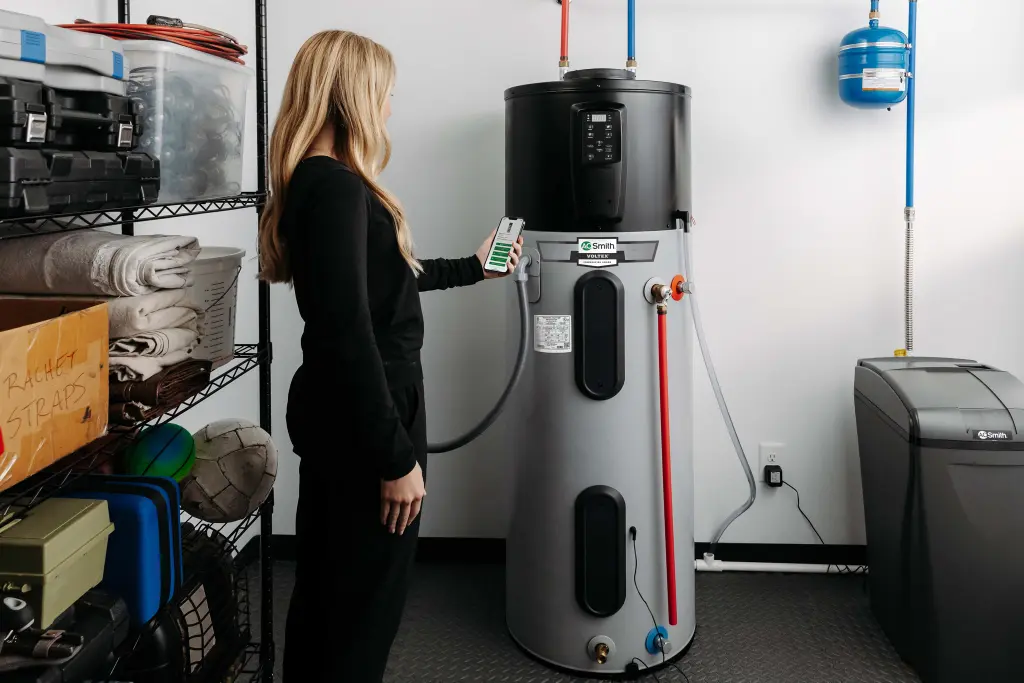
A storage tank water heater is a system that heats and stores water in a tank so it’s ready for use whenever needed. It keeps water hot 24/7, using either electric heating elements or a gas burner to maintain a consistent temperature.
Main Components & Their Functions
Let’s break down the structure and function of each key part:
1. Tank
-
Material: Usually made from steel, lined with glass, porcelain, or enamel to resist corrosion.
-
Capacity: Typically ranges from 30 to 80 gallons for residential use.
-
Insulation: Surrounded by foam or fiberglass insulation (often polyurethane) to minimize standby heat loss.
-
Outer Jacket: A metal shell protecting the insulation and tank.
2. Dip Tube
-
A long pipe inside the tank where cold water enters.
-
Delivers cold water to the bottom of the tank to avoid cooling the already hot water at the top.
-
Promotes thermal stratification, helping hot water rise and cold water stay low.
3. Heating Source
-
Electric Model:
-
Contains one or two electric resistance heating elements (usually upper and lower).
-
Heats water directly via electricity.
-
-
Gas Model:
-
Uses a gas burner at the bottom.
-
Controlled by a thermocouple and gas control valve.
-
Combustion gases are vented through a central flue with a baffle to maximize heat transfer.
-
4. Thermostat
-
Temperature-sensing control device that activates the heating element or burner when the water drops below the set temperature.
-
Set temperature range: Commonly 110°F to 140°F (43°C to 60°C); 120°F is often recommended for safety and energy efficiency.
-
In dual-element electric heaters:
-
Upper thermostat controls the upper element and also controls switching to the lower element.
-
Only one element operates at a time to avoid overloading.
-
5. Hot Water Outlet
-
Located near the top of the tank, where the hottest water accumulates.
-
Connects to the hot water pipe leading to taps and fixtures.
6. Anode Rod (Sacrificial Rod)
-
Made of magnesium, aluminum, or zinc alloy.
-
Attracts corrosive ions and minerals in the water, preventing them from rusting the tank.
-
Corrodes over time and needs periodic replacement (every 3–5 years).
7. Pressure Relief Valve (T&P Valve)
-
Temperature and Pressure Relief (T&P) valve is a critical safety device.
-
Opens to release water if:
-
Temperature exceeds ~210°F (99°C)
-
Pressure exceeds ~150 psi
-
-
Prevents tank explosion or rupture from overpressure.
8. Drain Valve
-
Located at the bottom of the tank.
-
Used to:
-
Drain water for maintenance
-
Flush out sediment
-
-
Typically brass or plastic, with hose connection capability.
9. Flue Pipe and Baffle (Gas Only)
-
In gas models, hot combustion gases rise through a central flue.
-
A baffle inside increases surface area and slows down gases, allowing more heat transfer to the water.
-
Gases then exit through a chimney or vent hood.
How It Works – Step-by-Step Process
Electric Water Heater Operation
-
Cold water enters via the dip tube, reaching the bottom.
-
Thermostat senses water is cooler than the set temperature.
-
Upper heating element activates first (if dual-element model).
-
Once top water reaches the desired temperature, the lower element activates.
-
Heating stops once water throughout the tank is at set temperature.
-
When a hot water tap opens, hot water exits from the top.
-
Cold water enters again from the bottom, and the cycle repeats.
Gas Water Heater Operation
-
Cold water enters the tank.
-
Thermostat triggers the gas control valve to open.
-
Gas flows to the burner under the tank and ignites.
-
Hot combustion gases rise through the flue pipe, heating the water.
-
Heated water rises to the top.
-
Taps draw hot water from the top as needed.
-
Cold water refills from the bottom, restarting the process.
Internal Water Dynamics: Stratification & Convection
-
Water in the tank is stratified by temperature:
-
Hot water at the top
-
Cold water at the bottom
-
-
When heating:
-
Convection currents form: hot water rises as it’s less dense.
-
-
This natural layering ensures the hottest water is always available first at the outlet.
Performance Metrics
First Hour Rating (FHR)
-
Measures how much hot water the tank can deliver in an hour of use.
-
Includes stored hot water + recovery within that hour.
Recovery Rate
-
Measures how quickly the water heater can reheat the tank after hot water is used.
-
Gas heaters generally have faster recovery than electric.
Energy Factor (EF) / Uniform Energy Factor (UEF)
-
Indicates efficiency (higher = better).
-
Modern electric models: UEF ~0.90–0.95
-
Gas models: UEF ~0.60–0.70
Maintenance Guidelines
| Task | Purpose | Frequency |
|---|---|---|
| Flush the tank | Remove sediment | Every 6–12 months |
| Check anode rod | Prevent corrosion | Every 2–3 years |
| Test T&P valve | Safety check | Annually |
| Inspect for leaks | Prevent damage | Monthly |
| Insulate pipes | Reduce heat loss | One-time |
Sediment build-up is a major issue, especially in areas with hard water. It can reduce heating efficiency, damage elements, or make noises.